When a Water Utility Gets Hacked, Every Business in the Supply Chain Is Next
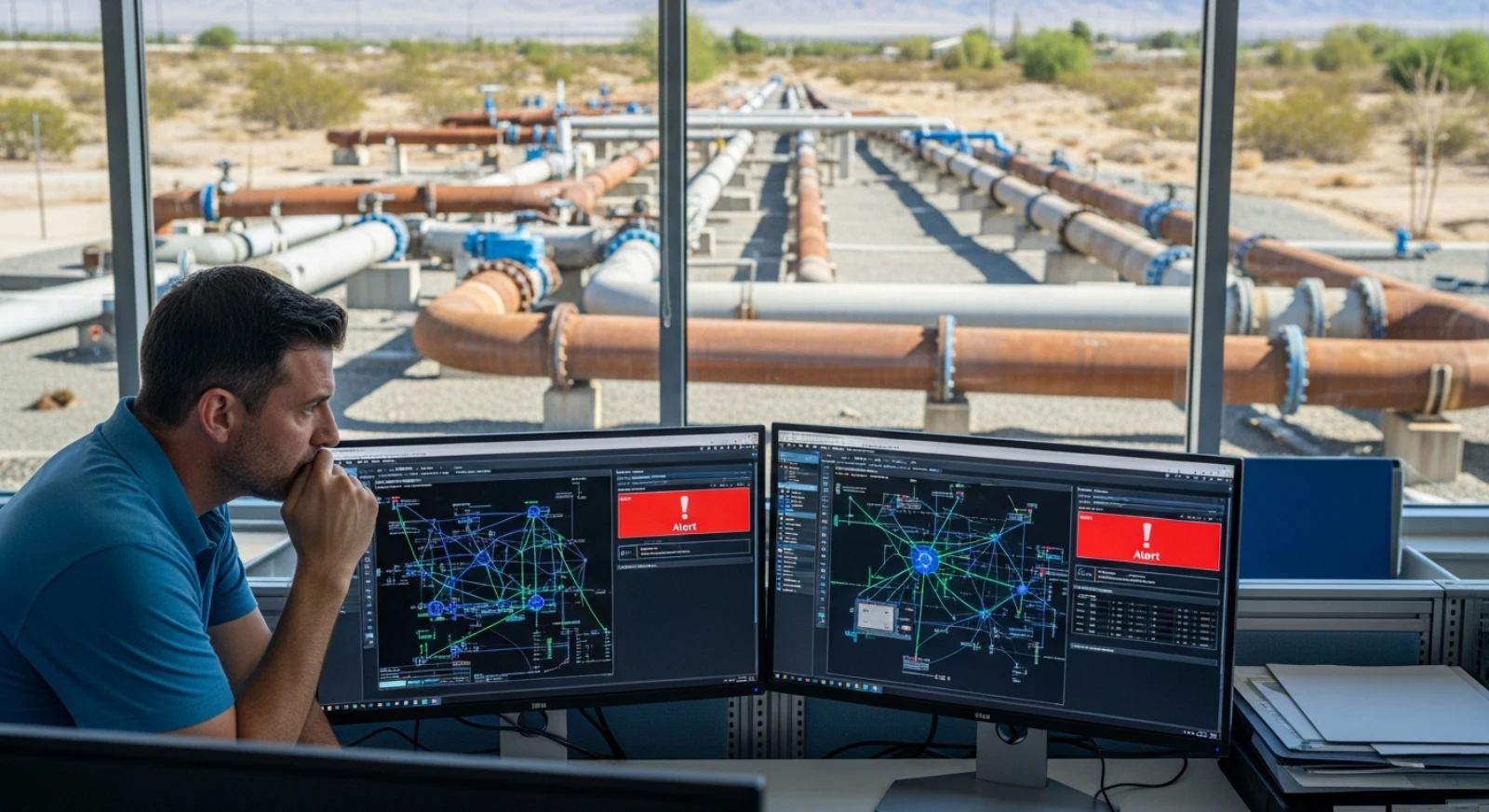
Five days ago, the Iranian-linked cyber group Handala publicly claimed it breached billing systems at water utilities serving Bakersfield, Visalia, and Chico — publishing screenshots of resident billing records and asserting it had exfiltrated 5GB of data. The stated motive: retaliation for U.S. military actions against Iranian water infrastructure.
Most of the coverage treats this as a government problem. It isn’t.
The Real Story Isn’t the Hack — It’s What Happens Next
When you hear “water utility breach,” it’s easy to picture a government IT team scrambling to patch servers and move on. That framing misses what actually matters for the thousands of businesses, vendors, and residents connected to those systems.
Handala now holds 5GB of billing data — real names, real addresses, real account numbers — for an unknown number of California residents and businesses. That data doesn’t sit in a folder somewhere. It gets weaponized.
Here’s how it works. A CPA firm in the area pays its water bill through an online portal. An employee’s name and business address are now in that dataset. A few weeks from now, that employee gets an email that references their account number, their service address, and a dollar amount that matches their last payment. The email looks completely legitimate — because all the details are real. It just has one small problem: the link it’s asking them to click routes through a server in Tehran.
That’s what the mainstream press is missing. This isn’t a water utility problem. It’s a data supply chain problem, and the blast radius extends to every vendor, contractor, and ratepayer connected to those systems.
State-Sponsored Groups Don’t Stop at One Target
Handala isn’t a ransomware gang looking for a quick payout. Groups operating at this level probe systematically. They breach one system, map the connections to adjacent vendors and third parties, and work their way outward.
If you’re a business that interacts with these utility systems — submitting invoices, processing payments, managing service accounts — you’re part of that map now. The breach at the utility gives threat actors a credible entry point into your world.
Think about it this way: anything government or government-funded carries an elevated risk profile. But that risk doesn’t stay contained to the government entity. It flows downstream to everyone doing business with them. That puts a huge swath of businesses — contractors, medical offices, financial services firms, commercial property managers — one degree away from a state-sponsored threat actor. That’s not a comfortable place to be.
The retaliation framing matters here too. When a group’s motive is geopolitical rather than financial, the calculus changes. A ransomware crew wants to get paid and move on. A state-sponsored group operating under a retaliation mandate doesn’t necessarily have a clean exit condition. CISA has documented this pattern extensively with Iranian-linked groups — they tend to be persistent, patient, and methodical.
This Spreads Like Wildfire — And Small Businesses Are the Most Vulnerable
Here’s the thing about a supply chain attack: it only takes one click.
Businesses and vendors interact with each other constantly. One employee at a construction firm receives a convincing phishing email built from stolen utility data, clicks the attachment, and now the attacker has a foothold inside that company’s network. From there, it spreads — to their clients, their accountant, their insurance broker, whoever they share files or invoices with.
Most small business owners read “water utility hack” and think it doesn’t apply to them. They’re not a high-profile target. They’re not a billion-dollar company. They figure the attackers are going after somebody bigger.
That logic has it exactly backwards.
Small businesses are more attractive in a supply chain attack, not less — precisely because their defenses are thinner. Larger organizations and government agencies have dedicated security teams, incident response plans, and resources to recover. Many small businesses don’t. According to the FBI’s IC3 annual reporting, small businesses consistently represent a disproportionate share of successful cyberattack victims. A breach that a regional hospital weathers might put a 10-person accounting firm out of business entirely.
The wildfire analogy is apt. One spark, and it jumps from business to business through every shared connection — email threads, shared cloud drives, vendor portals, billing systems.
FAQ
Is my business actually at risk if I’m just a ratepayer and not a vendor?
Yes, potentially. If your business address and account details were included in the billing data that was exfiltrated, that information can be used to craft targeted phishing attacks against you. You don’t have to be a vendor or contractor — being a customer of the breached utility may be enough to put your data in circulation.
How would I know if someone was using stolen utility data to target my business?
You probably wouldn’t — not at first. That’s what makes these attacks effective. The emails look legitimate because the details are accurate. Your best defense is a verification habit: if you receive any communication asking you to click a link, update payment information, or provide credentials, pick up the phone and call the sender directly using a number you already have on file — not a number provided in the message.
What if my employees work remotely and use personal devices to access business systems?
This is a significant exposure point. Personal devices are far less likely to have endpoint protection, managed security software, or enforced patching. If a remote employee’s personal device is compromised through a phishing email, attackers can often pivot from that device into your business systems. This is worth a direct conversation with your IT provider.
Do I need to worry if I’m not in Bakersfield, Visalia, or Chico specifically?
The geographic question is worth asking, but the data concern extends wherever those utility systems have customers and vendors — and sophisticated threat actors often sell or share exfiltrated datasets. Beyond the specific utilities named, this incident is a signal that critical infrastructure in California is actively being targeted. That’s relevant context for any California business.
What’s the difference between a state-sponsored attack like this and a regular ransomware attack?
A ransomware crew typically wants a fast payout — they encrypt your data, demand payment, and move on. State-sponsored groups often have broader objectives: intelligence gathering, supply chain disruption, establishing persistent access for later use. They tend to be more patient, more methodical, and harder to detect. The NIST Cybersecurity Framework distinguishes between threat actor types precisely because the response strategy needs to match the threat profile.
What to Do This Week — Not Eventually, This Week
If this story put a knot in your stomach, that’s the right response. Here’s how to convert that into action before the week is out.
Review your vendor interaction policies. Do your employees know what to do when they receive an invoice or payment request that looks slightly off? Write it down if it isn’t written down already. “When in doubt, verify by phone” needs to be a documented procedure, not just common sense.
Verify before you click — and use the number you have, not the one in the email. This is the single most effective defense against phishing attacks built from stolen billing data. If you get an email about a water account, a vendor invoice, or a payment link, call the organization directly using the number in your own records. Not the number in the email.
Have a direct conversation with your IT provider about third-party data exposure. Ask specifically: what systems do we have connected to external vendor portals? What monitoring is in place for unusual login activity? If your provider can’t answer those questions clearly, that’s important information.
Don’t assume your size makes you invisible. The businesses most likely to survive a well-crafted attack are the ones that took the threat seriously before the email landed. The ones that assumed they were too small to be targeted often find out they were wrong at the worst possible moment.
This attack is a reminder that we’re all one step away from a threat actor who has already breached something we’re connected to. That’s not fearmongering — that’s just how supply chains work.
If you’d like to talk through your specific exposure, schedule a free discovery call with our team.