
The "Dirty Jobs" of Small Business: Lessons from Mike Rowe
Small businesses are the dirty jobs of the economy.
They're not glamorous. They don't come with applause. Most days, no one sees the work at all. But they are the reason everything else doesn't quietly fall apart downstream.
Big companies get the spotlight. Startups get the hype. Small businesses get the responsibility. When they fail, communities feel it immediately. When they succeed, most people never notice—because things simply work.
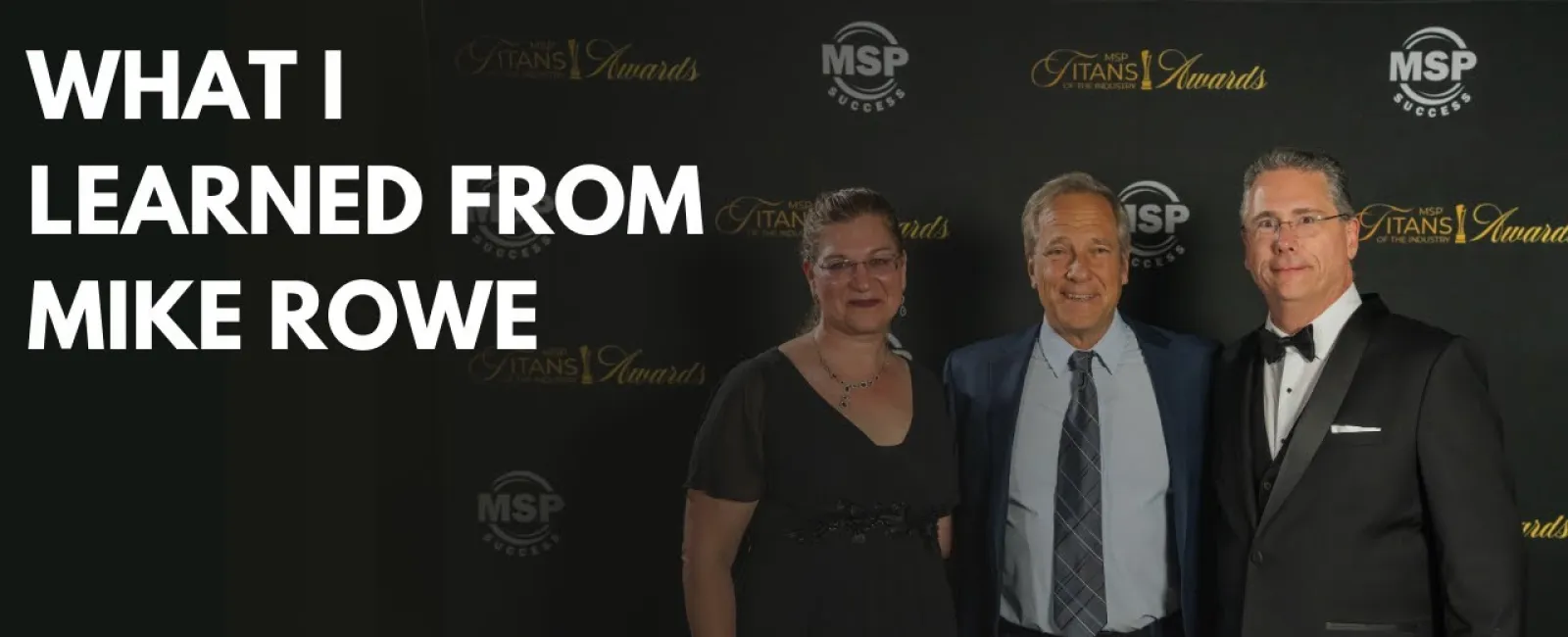
That reality came into sharper focus for me after meeting Mike Rowe. What struck me wasn't a polished keynote or a rehearsed message. It was how genuinely down to earth he was—and how deeply he cares about restoring respect for work that actually keeps society running. Not the flashy work. The necessary work.
Embracing the Unsexy Work
In a small business, there's nowhere to hide behind titles.
The owner is often the sales team, the HR department, the bookkeeper, and the person rebooting the router at six in the morning before anyone else arrives. You don't "stay in your lane" because there aren't lanes—just whatever needs to be done to keep the doors open.
That forces a reckoning with what actually matters. Not what looks good on LinkedIn. Not what makes for a slick marketing video. But the work that keeps customers served, systems running, and problems from turning into disasters.
Small business success is rarely about image. It's about function.
Why Skills Beat Slogans Every Time
Customers don't pay for vibes. They pay for competence.
Mission statements and culture posters don't fix broken systems, missed deadlines, or real-world problems. Skill does. Training does. Experience does.
That's why actionable training matters more than collecting credentials that never get used. A certificate on the wall doesn't help if no one knows how to apply it under pressure. Small businesses live and die by what their people can actually do—not what they say they value.
This is where the trades offer a powerful lesson. The world does not function without plumbers, electricians, mechanics, and technicians—many of whom never set foot in a traditional college classroom. They learned by doing. By solving real problems. By being accountable for real outcomes.
That mindset translates directly to small business.
Reliability Is a Competitive Advantage
Reliability doesn't sound exciting, but it's rare—and it wins.
Large companies can miss deadlines and survive on brand recognition. Small businesses can't. They win by showing up, following through, and doing exactly what they said they would do.
Sometimes the bar is shockingly low. Simply answering the phone can put a small business ahead of half the market. Returning emails. Arriving on time. Finishing the job.
These small, unremarkable actions compound into trust. And trust is the currency that keeps small businesses alive long after marketing campaigns fade.
Cultivating an Ownership Mentality
"There's no such thing as 'that's not my job'" isn't a slogan—it's a survival requirement.
In small teams, every person is responsible for protecting the work, the customer, and the business's reputation. One ignored system. One skipped process. One careless decision. That's all it takes to undo years of trust.
Ownership doesn't mean burnout. It means care. It means understanding that what you do—or fail to do—has consequences that ripple outward.
When people feel true ownership, quality improves naturally. Problems get solved instead of passed along. And customers feel the difference.
Respect the People Who Keep the Lights On
The most valuable people in any small business are rarely the loudest.
They're the quiet problem-solvers. The ones who fix things before they break. The ones who don't panic, don't posture, and don't need recognition to do excellent work.
These employees should be treated like gold. Paid fairly. Supported. Given ongoing training. Because the idea that good employees are easily replaceable is one of the most expensive myths in business.
Replacing competence costs more than retaining it—every time.
Real People Doing Real Work
Small businesses don't succeed because of branding alone. They succeed because real people show up and do real work, day after day, often without recognition.
The lesson is simple, even if it isn't easy: respect the work. Demand responsibility. Invest in the specific skills required to do the jobs we love—and the ones no one talks about.
Because when the unglamorous work is done well, everything else gets to function. And that's worth more than any slogan ever could.


